How to Pick Toys for Baby's First Year

It's easy to get caught up in the eating and sleeping cycle that shapes baby's first year, but you can't forget about play! Toys are not just about fun these months - they help baby practice and ready themselves for developmental milestones.
In this article, we'll tell you the five factors you should look for in toys, so you choose just the right ones that will support your little one's development and not just add to the clutter (what NYC apartment needs that, right?)
TLDR
Toys aren't just about keeping baby busy: the right ones actively build the skills they're working on next. Before you buy, run it through the five checks: age/safety, developmental fit, material, how long it'll hold their interest, and how much space it'll actually take up in your apartment. Nail those and you'll end up with toys that earn their shelf space instead of just adding to the pile.
Table of Contents
- The Five Factors
- Playtime with Babesta
The Five Factors
Age Appropriateness & Safety

The first thing you want to think about when picking toys for your little one is will it be safe. Toys with small pieces are choking hazards, and babies frequently mouth their toys. The good news is that toys are labeled by age, and anything labeled for under 12 months will not have small parts - in fact, the delineation is 3 years when toys start having small parts.
This being said, even though a toy labeled for 18 months is technically safe from a small parts standpoint for a 9-month-old, the skills it challenges are likely not ones that a child significantly younger is developmentally ready for.
Developmental Fit

The next thing to look at is the purpose of the toy. Playing is learning with babies, and each quality toy sets out to build a skill, be it sensory exploration, gross motor skills like stacking, or cause and effect like a musical instrument (hitting the keys makes a sound).
Ideally, you have an array of toys that challenge each of the developmental skills they're working on, or the next ones up!
Material

Next up: what is the toy made of? Is it wood, fabric, plastic, or silicone? Each type of material will wear and clean up differently, particularly those that get put in the mouth like teethers. We tend to like wooden and silicone toys the best, and always are drawn to award winning parent-approved options for acquiring developmental skills.
Multi-Stage Use

You can also think of the longevity of the toy - is this something that they'll have for a year, or is it something they'll ignore by the time the day is done? Sometimes this can be hard to predict, but certain toys like teethers, blocks, stuffed animals, and instruments tend to have longer lasting appeal.
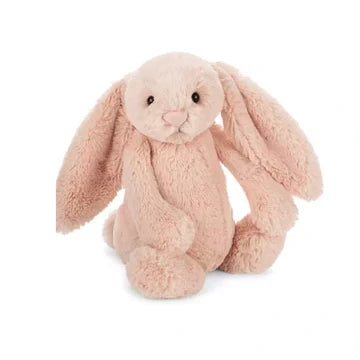
For instance, that Jellycat that they reached for during tummy time at 2 months, becomes a nighttime companion at year two and a crucial part of their pretend play by age four.
Storage & Footprint

Lastly, you want to think about how much of your NYC apartment does it take up. You'll also want to think of storage. As toys start to aggregate this becomes a real issue, so get prepared with some soft bins or shelving to organize your baby's growing options for play, and when they're over a toy, give it to a younger friend.
Playtime with Babesta
When it comes to finding the right toys for your tot, think about safety first, and then developmental skills tested, material, longevity, and storage.
At Babesta, we try to offer toys from top quality brands that are not only intentional about developmental skills but timeless. We won't let you lose your cool shopping for toys. Babesta will always have your back.
Frequently Asked Questions
What actually makes a toy unsafe for a baby under 12 months?
Mainly four things: small parts that fit inside the standard choking-hazard test cylinder (the official cutoff is anything intended for kids under 3, not just under 1)., cords/ribbons/strings over about 12 inches (strangulation risk), loose or exposed stuffing or eyes on plush toys, and button batteries or strong magnets, which are dangerous even in tiny, swallowed amounts. Sticking to labeled age ranges covers most of this automatically.
Do open-ended toys really matter before age one?
Yes, more than people expect. Even at a few months old, babies do more with a toy than one "correct" use allows: mouthing it, banging it, dropping it, looking at it from a new angle. Open-ended toys (blocks, rings, soft shapes) let that exploration happen instead of funneling baby toward one scripted action, which is part of why they tend to have the multi-stage longevity we mentioned above.
How many toys should realistically be "in rotation" at once?
Most Montessori-style guidance lands around 8-10 toys accessible at a time for a full playroom, but for babies under a year, 4-6 in rotation is usually plenty (attention span and mobility are limited at that age, and fewer choices means longer, more focused play). Keep the rest in a bin and swap every week or two.
Can I register for toys labeled for an older age range, to use later?
Yes, and it's a smart registry move for open-ended toys especially. A good set of blocks or a play kitchen gets used for years. The one place to be careful: toys labeled for 3+ are allowed to have small parts, so don't plan on handling one to a child under 3 early just because they seem developmentally ready.
What's the real difference between a sensory toy and a developmental toy?
Developmental toy is the umbrella term: it's anything intentionally designed to build a skill, whether motor, cognitive, language, or social-emotional. A "sensory toy" is a specific slice of that, referring to toys built primarily to give input to sight, sound, touch, or texture (a crinkle toy, a textured ball, a high-contrast board book). So, every sensory toy is developmental, but not every developmental toy sis primarily sensory. For instance, a stacking cup set is developmental (gross motor, cause and effect) without doing much sensory work on its own.
Additional Reading