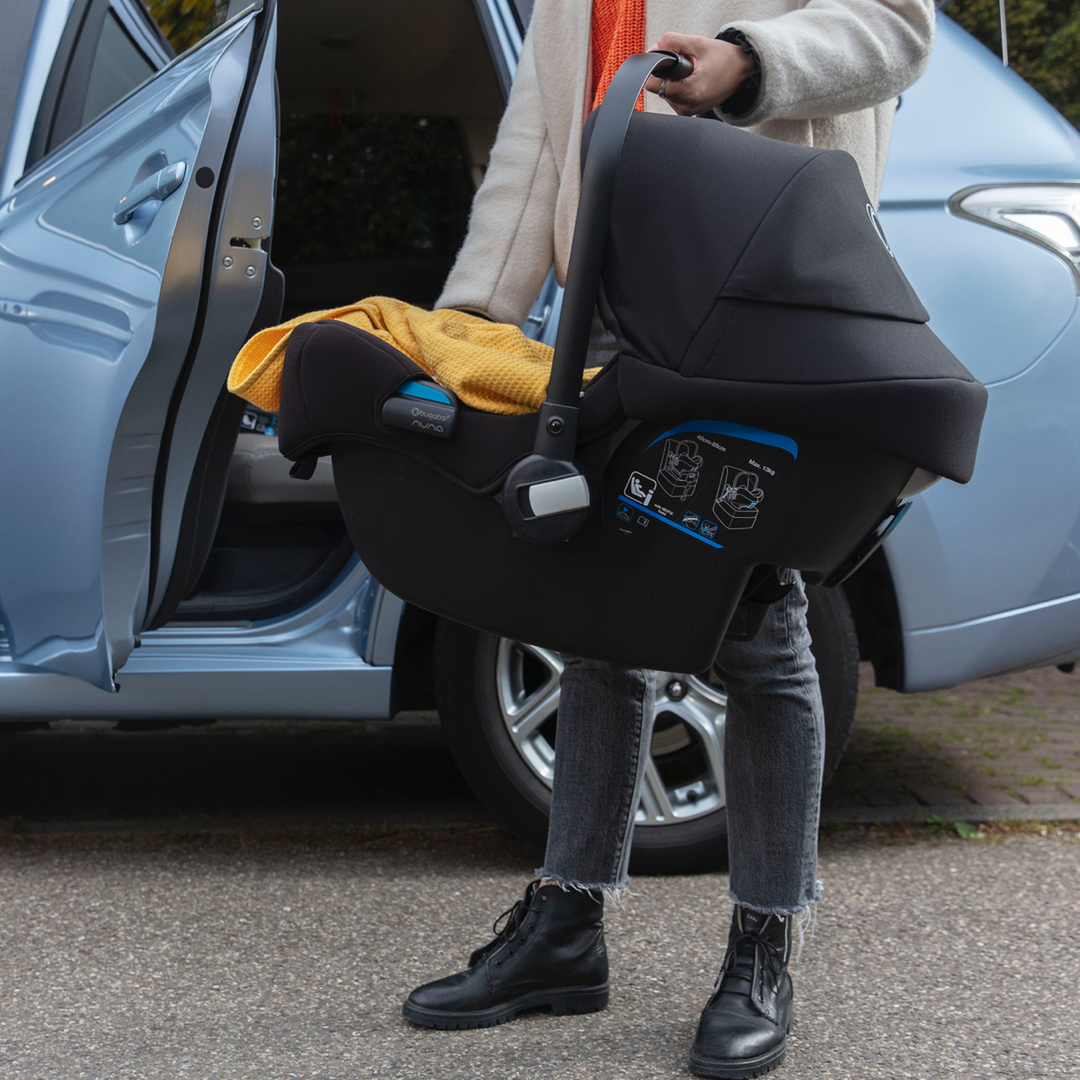
Infant Car Seat Checklist: What You Need Stage by Stage

The single most important thing you need to get before baby arrives is the infant car seat (otherwise you’ll never leave the hospital!). But beyond just the infant car seat itself, you’ll need a few more things on the checklist including a base possibly (though most seats come with one), the instruction manual (so that you know how to install it into the car and how to adjust the straps), and possibly some accessories like an infant insert, SensAlert, and car seat protector to name a few.
In this article, we’ll give you the lowdown on everything you need to register for in the car seat category. Knowing baby will be riding in safety and comfort for their first trip: priceless.
TLDR
Your infant car seat checklist should include an infant car seat, car seat base (possibly), instruction manual, and potentially some accessories including a vehicle seat protector, infant insert, SensAlert, and car seat footmuff (if it’s cold). As a NYC parent, you’ll need to choose a car seat with European belt routing (for seatbelt installation in Ubers and Taxis), and if you have a car, one with a load leg on the base. Be sure your chosen seat is compatible with your chosen stroller/strollers either directly or with an adapter. If you don’t have a car, think about a baseless car seat which will save money and space.
Table of Contents
-
The Infant Car Seat Checklist
-
Three Features to Check For, No Matter What You Buy
-
How Many Bases Do You Actually Need?
-
Don’t Forget Your Stroller
The Infant Car Seat Checklist
Infant Car Seat (or/and Convertible if you Drive Daily)

As we said, in order to leave the hospital, you’re going to need an infant car seat. This technically could be either a proper infant car seat - small, portable, and always rear-facing - or a convertible car seat which is bigger, stays installed longer, and can face rear or forward. Most NYC families start with the infant seat: it clicks into your stroller, comes out of the car with a sleeping baby and doesn't assume you own a car at all.
A convertible can make sense if you're driving daily in your own car and don't need that portability - just know it's a much bigger seat to lug in and out of a rideshare. For the full breakdown of which is right for you, see Infant Car Seat vs. Convertible Car Seat. Whichever you choose, look for one that's compatible with your stroller(s), has European belt routing and - if you have a car- a load leg on the base. More on picking the right seat in How to Pick an Infant Car Seat.
A Base - Do You Need One?

Typically, your car seat will come with a base, whether you want one or not. Whether you actually need to use it comes down to one thing: do you have a car? If your seat has European belt routing, you can skip the base entirely - it gives you a second point of security beyond the lap belt, and it's what makes a seatbelt-only install safe.
Short version: have a car? Keep the base - install it once and your seat clicks in and out in seconds. No car? The base is just a pet rock taking up closet space; skip it and install with the seatbelt method instead. For exactly how many bases you need, see How Many Bases Do You Actually Need? below. For the deeper case, see Base vs. Baseless.
Owner’s Manual to Keep in Your Car
Your infant car seat will come with a manual that tells you how to install it and then how to use it. Keep that on hand in your car for reference.
Mirror for Rear-Facing Checks
As your baby will be rear facing for the life of the car seat (normally about 12 months), it’s a good idea to register for a mirror so that you can look in the rearview mirror and catch your precious baby’s eye.
Car Seat Adapter (if necessary) for All Strollers
Of course you’ll also want car seat adapters so that you can attach your chosen infant car seat to your stroller. We suggest registering for a separate set of adapters for each stroller, as this will give you the most choice as to how you travel. Whereas most of the time parents travel with their lightweight stroller just because it’s easier, if your baby is very little or you’re staying somewhere for an extended period of time, you might want to travel with your primary full-size stroller.
Optional Accessories
There are a few more extra infant car seat accessories to consider. Let’s take a look.
Vehicle Seat Protector
If you’re installing the infant seat into your brand new luxury vehicle, we can’t blame you: you don’t want indentations on the buttery leather seats. Enter the vehicle seat protector, (Clek's is called the Mat Thingy) which puts a layer between the car seat and your backseat.
Car Seat Travel Bag
You may also want a car seat travel bag for when you’re on the go. These are usually padded to protect the car seat during your trip.
Car Seat Safe Footmuff
The rule of thumb is that you should never put your child in a bulky jacket, puffer, sweater, or footmuff when using the car seat. That’s because the extra thickness or cushiness makes the straps of your car seat not fit as they should. Instead, you get a car seat safe footmuff that goes over the straps, not under, keeping baby toasty in a safe way. The 7AM Cocoon and Nido both fit the bill.
Infant Insert
Generally infant car seats come with inserts, but some convertible car seats sell them separately. If you choose a convertible, double check the smallest size it accommodates, and if you need an insert.
SensAlert
The SensAlert is another option for the tech-forward parent. This is a device that you sync up with your phone that will alert you if you exit the vehicle without the baby.
Three Features to Check For, No Matter What You Buy

Whichever car seat you choose, if you live in the city or if you travel, or if you have a car, you’re going to want to look for the following features:
European Belt Routing: A Must for City Families
As covered above, European belt routing is what makes a safe baseless install possible - it gives the shoulder harness a second point of contact beyond the lap belt, so the seat doesn't shift the way it would with the lap belt alone. If you're relying on Ubers and taxis instead of your own car, don't buy a seat without it.
Maximum Length and Weight of Child
The second thing to check is the seat's maximum height and weight - once your child exceeds either the seat's no longer safe to use, and you'll move up to a convertible seat. If you don't have a car, this is worth extra attention: a higher height max buys you more months before you're managing that transition. There's also a real lightness-vs-longevity tradeoff between seats - see How to Pick an Infant Car Seat for how to weigh the two against your own situation.
Load Leg (if Installing in Your Own Car)
If you are using the base of your car seat, then you want that base to have all the safety bells and whistles. The key feature you want is a load leg. This is a metal leg that runs from the base to the floorboard of your car keeping it steady. The load leg reduces crash forces on the child by limiting downward rotation and rebound. Basically it makes the seat safer, so you want it.
Lightness vs. Longevity: Which is More Important?

You want your car seat to be as light as possible but you also want to be able to use it for as long as possible, but these things normally don’t come in pairs. Lighter car seats are normally smaller (less material, less weight) and tend to cap out at 30” max child length. This means your child will grow out of it sooner than a inevitably heavier 32” model.
Which is more important is up to you. If you don’t have a car in the city, we’d argue for a slightly heavier seat with a 32” maximum. If you have a car and are fine driving your child around the city when you need to travel, then go for the lighter one. Keep in mind if you have a compatible stroller, the weight is only relevant when transferring your child from the car onto the stroller. You probably won’t be hauling the child around freestyle, unless you’re doing it to bulk up your arms.
How Many Bases Do You Actually Need?
One Car, One Base
If you have a car, you want a car seat base. Leave the base in the back of your car and click your seat in and out of it as you need. If you take a taxi, leave the base in your own car and install the car seat in the back of the taxi using the seatbelt method.
A Second Base for a Second Car or Grandparents
If you’re spending a lot of time at grandma’s house or if you’re a two car household, make it easy on yourself and get a second base. Again, click in, click out. Easy peasy.
No Car? Skip the Base
If you don’t have a car, look for a seat built for a baseless installation - see Best Infant Car Seats for City Families for our top picks.
Don’t Forget Your Stroller

You should never choose your car seat without paying mind to your stroller.
Why This Isn’t a Separate Decision
The beauty of an infant car seat is if you’re on the go, you can click onto a stroller to make a travel system. As such, you need to make sure that your chosen seat and stroller are compatible either directly or with the use of car seat adapters.
It’s a real bummer if you went ahead a made choices that didn’t work together, or if you buy an infant car seat and then learn that it will only work with a stroller that didn’t have the features you want.
In NYC, the stroller is basically your vehicle with which you navigate your life. It’s important that you get exactly what you want as you’re going to be very dependent on it. We suggest choosing your stroller first in NYC and then choosing among the compatible car seats.
The Case For Mixing and Matching Brands
Now of course, there are those who just pick the brand they like and buy everything from that brand and that’s just fine. But the truth of the matter is that’s not always going to serve you the best. We’d rather you have the best infant car seat, full size and lightweight stroller for your situation, and that doesn’t necessarily mean they’re all one brand. Here's a bit more about compatibility.
Riding With Babesta on Board

Getting all the boxes ticked on the “Ride.” section of the registry is easy now that you can see the big picture of what you need. Just a seat, possibly a base, the instructions, and a mirror are musts, and you can choose from the rest of the possible accessories depending on the time of year, your tech savviness, and your vehicle itself.
When you’re ready to register, we’re here to help you each step of the way, from getting a lay of the land, to comparing models, to making a final selection. And, unlike online only shops, we’re here after baby has come and you have questions about your gear, need help with a warranty or start planning for baby two.
You don’t have to lose your cool when shopping the baby market when you shop at Babesta. We have your back.
Frequently Asked Questions
What is a travel system?
A travel system is a stroller and infant car seat designed to click together - they seat snaps directly into the stroller frame so you can move a sleeping baby from the car to the stroller without waking them. It can be a matched set from one brand, or a mix of brands connected with an adapter.
Do I have to buy the same brand of car seat as my stroller?
No - most infant seats are cross compatible with other stroller brands via an adapter so you’re not locked into matching. The one thing to check: some brands only click into their own products so confirm compatibility with both your primary stroller and any lightweight stroller before you buy, not just one or the other.
Do I need a convertible car seat eventually anyway?
Not necessarily - it comes down to how you’re using the seat, not a fixed timeline. If you’re driving daily in your own car, a convertible is often the simpler and one-and-done choice; if you rely on more taxis and Ubers, an infant seat’s portability keeps paying off well past the newborn stage.
Can I really skip the base if I don’t have a car?
Yes. Most infant seats install directly with the vehicle’s seatbelt - no base required - as long as the seat has European belt routing which is exactly what makes it usable in a taxi, rideshare, or borrowed car on the spot.
How many car seats do I actually need to register for?
For most families, one infant car seat is enough - it travels with you. Add a base for each car you’ll regularly install in (a second base makes sense for a second car or a grandparent’s car you visit often) and skip the base altogether if you don’t own a car.
When do I switch from instant to the next stage?
Switch once your baby outgrows the seat’s height or weight limit, whichever comes first - check your specific car seat’s manual, since limits vary per model. At that point you move up to a convertible seat, which carries your child through several more stages.
Explore the Rest of the Category
Ready to go deeper? Explore the rest of the ride. guide:
Infant Car Seat vs. Convertible Car Seat: Which One to Buy First
Base vs. Baseless: How to Install in the City
How to Pick an Infant Car Seat: Fit, Install & Expiration
Best Infant Car Seats for City Families: Babesta Picks