Infant vs. Convertible Car Seat: Which Do You Actually Need First?

Although technically you can choose either an infant car seat or convertible car seat as your day-one, the right choice will depend on where you live and your lifestyle: If you’re in the city and taxis and Ubers are your transport modes, the lightweight, portable infant car seat is more convenient albeit short-lived, whereas if you’re a road warrior in your own car, a larger, less portable convertible seat can work wonders and has longer staying power.
In this article, we’ll explore the pros and cons of starting with an infant car seat or going straight to the convertible.
TLDR
Most city families start with an infant car seat as infant car seats are lighter and can click onto a compatible stroller, making them easier to get around with. However, for families that use their own car daily, a convertible as the one and done can make sense.
Table of Contents
-
What Each One Actually Is: Infant vs Convertible Car Seat
-
Side by Side Comparison
-
Why Most City Families Start with an Infant Car Seat
-
Where a Convertible Car Seat Makes Sense Instead
-
Can You Skip the Infant Stage Entirely?
-
What This Means for Your Registry
What Each One Actually Is: Infant vs. Convertible Car Seat

Infant Car Seat: Built to Come Out of the Car
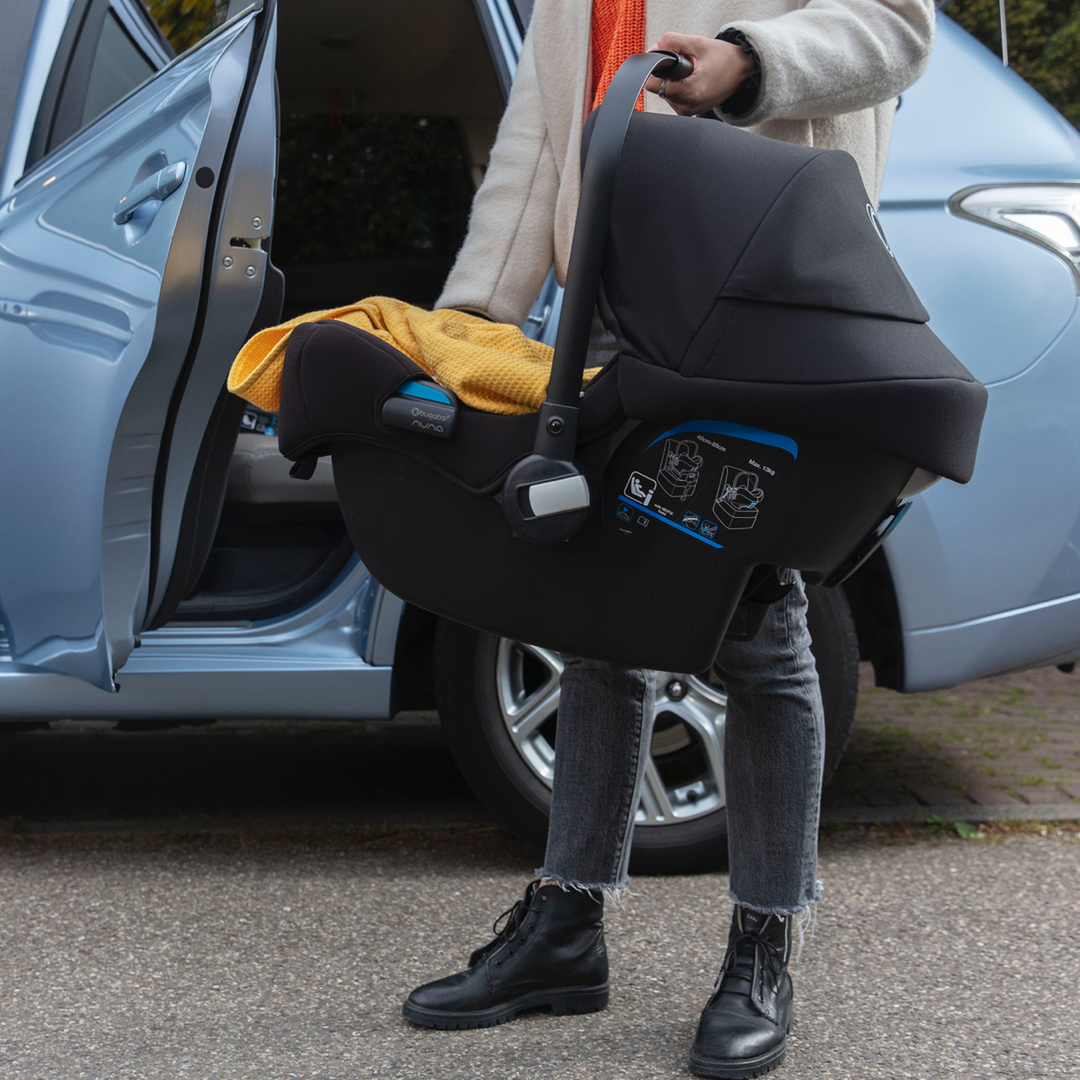
An infant car seat is a compact rear facing only seat designed to detach from its base and travel with you - clicking into a stroller, coming into the house, going wherever your baby goes. It’s built for portability first, which is why most city families start here.
Convertible Car Seat: Built to Stay Installed

A convertible car seat is a larger seat designed to stay in your car long term (although you can travel with them), facing rear at the beginning and then facing forward as your child grows. It trades easy portability for longevity - no clicking into a stroller but one seat that can carry your child through several stages.
Side by Side Comparison
| Infant Car Seat | Convertible Car Seat | |
| Weight Range | Typically 4-30 lbs | Typically 4-65 lbs, though some can be used as booster seats too going up to 120lbs |
| Height Range | Typically 30"-32" | Typically up to 40" to 49" |
| Carry Out Convenience | Detaches and carries with you | Normally stays installed though can be used for travel despite bulkiness |
| Stroller Compatibility | Clicks into compatible strollers either directly or with an adapter | None - not designed to click into a stroller |
| Price | Generally lower upfront | Generally higher upfront but purchase lasts years |
| How Long Before You Re-Buy | Lasts around 1 year | Lasts most of childhood, until child ready for a booster seat |
| Install Complexity | Simple - base installs once, seat clicks in or install using seatbelt without the base (taxi/Uber) | More involved install, but unless you're traveling with it, it stays installed for a long time (1x rear facing, 1x forward facing) |
Why Most NYC Families Start with An Infant Car Seat
There are a few key reasons that NYC families tend to favor an infant car seat to start with. Let’s take a look.
It Doesn’t Assume You Own a Car
First of all, many NYC families don’t own a car. An infant car seat is very quick and easy to install into an Uber or taxi using the seatbelt. A convertible car seat on the other hand is large, heavy, and tends to be more difficult to install on the go. Convertible seats envision a one- to two-time installation – once when it’s rear facing, and once more when your child is old enough to be turned to forward facing.
It Clicks onto Your Stroller

The other benefit of the infant car seat is that it can click onto a compatible stroller and create a travel system. You don’t want to just carry the car seat around (even though they’re light, with the baby inside, the pounds add up!), so being able to attach it to a set of wheels is great. A convertible seat, on the other hand, does not click onto any stroller, making portability a real challenge.
It Comes Out of the Car with a Sleeping Baby
Yet another check in the infant car seat’s column is that it can be taken out of the car and if the baby has fallen asleep in transport, they don’t have to be woken as they can remain in the seat. This being said, a car seat is not a safe-sleep area, so if your baby does fall asleep in it, gently remove them from the seat when you get home and place them in a crib or bassinet.
A convertible car seat is intended to stay in the car, so you’d have to remove your child from it curbside, risking them awakening with no alternate sleep space at hand.
Where a Convertible Car Seat Makes Sense Instead

But for some families, the convertible car seat can be a better choice:
You’re Driving Daily in Your Own Car (and Never Take Ubers & Taxis)
If you’re someone who only takes their car around and never takes other cars like Ubers and taxis, then go ahead, get a convertible seat. Once it’s installed correctly it can just live in your car and be a convenient choice if portability isn’t an issue.
You Want One Seat, Not a Second Later
Starting with a convertible seat is also a money saver, as you don’t have to purchase two seats. It’s always nice to cut down on the amount of stuff you buy, so if your lifestyle makes a convertible from day one feasible, go for it.
What This Means for Your Registry
Once you’ve figured out which car seat is right for you, it’s time to research the choices out there and, if you choose an infant seat, figure out which ones can work with your stroller to create a travel system. Check out our Car Seat Checklist for your registry. For city parents particularly, you might also want to read our article Base vs. Baseless, which describes the two types of infant seats and the benefits of each.
The Best Ride with Babesta

Understanding the car seat world is perhaps the most daunting part of your registry, as there is so much technology and safety involved and you want to get it right. Babesta has narrowed down options to some of the best and most highly rated options that work with our favorite full size, mid size and lightweight strollers.
You don’t have to lose your cool shopping the baby market. Babesta has your back.
Frequently Asked Questions
Do all convertible seats work for newborns?
No - not automatically. Some convertible seats accommodate newborns with an insert that keeps a smaller baby positioned safely in the harness, but not every model does, and even the ones that do often aren’t as snug or newborn-friendly as a seat built specifically for that size. If you’re considering starting with a convertible, check the seat’s minimum weight and insert requirements before you buy.
Can a convertible seat click onto my stroller?
No. (We’ve been begging companies for years to make one that could or had a special set of wheels of its own as this is a big pain point for city families). The click in portability is specific to infant seats. Convertible seats are built to stay installed in the car rather than travel with you, so they don’t have the stroller-compatible base and adapter system infant seats use. If you want a true travel system - seat clicks in and out of the stroller - you’ll need an infant seat, not a convertible.
How long will I actually use an infant car seat?
It varies by seat and by how fast your baby grows, but most infant seats are outgrown at or a little before/after a year, often by the height limit before the weight limit. Check your seat’s manual for its exact limits since they vary by model; once your baby hits either one, you’ll move up to a convertible seat for the long haul.
Related Reading
How to Pick an Infant Car Seat
Best Infant Car Seats for City Families