The NYC Registry Edit: Ride.
Everything baby needs for trips in a car, whether it's a personal vehicle or a taxi, Uber, or Lyft. Find the best infant car seats, convertible car seats, adapters and accessories - baby's "ride" necessities.


Need help? Babesta has your back!
Choosing your Car Seat
Infant car seat or convertible: What do I need first?
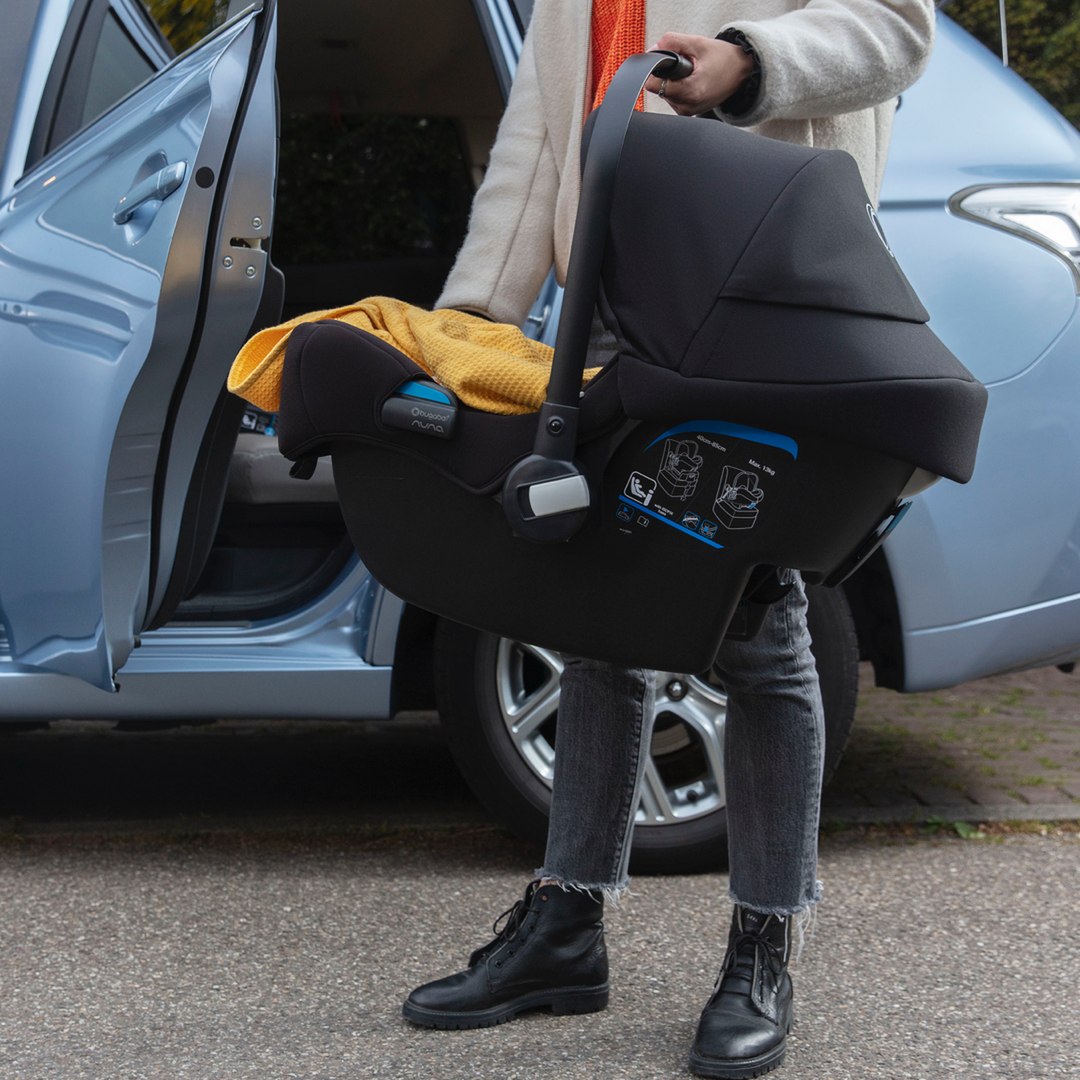
Start with the infant car seat. For most city families, it's simply the better first move: it clocks in and out of the car (or taxi) in seconds, snaps directly onto your stroller, and lets you carry baby in without waking them the second you're home (though if your baby is sleeping in the car seat, you should transfer them promptly to their crib).
It also doesn't assume you own a car - if you're relying on cabs, rideshares or someone else's car more than your own, the infant seat is what makes any of those a car-seat-ready ride in seconds.
The exception is if you're driving your own car daily. In that case, a convertible car seat can be the simpler, one-and-done choice - many now come with an infant insert that makes them safe from day one, so you skip the "buy again in one year" step entirely. Either way, you'll move on from the infant stage once your baby hits the seat's weight or height limit (most top out somewhere between 30-32 lbs., or once the top of their head is within an inch of the shell's edge) - whichever comes first.
Infant seat vs. convertible: Do I really need both on my registry?
No, but you're going to need both items in relatively short order. Every baby moves into a convertible seat at some pint; infant seats simply aren't built to last through the toddler years. But there's no rule that says you have to register for both. You can just take it as it comes.
If you know you'll be driving daily in your own car, you can register for a convertible from the start and skip the infant stage altogether. If you're not sure yet, or you know you'll want that carry-out portability early on, register for the infant seat now, and put the convertible on your list to be used closer to your baby's first birthday.
What else goes in the ride section of a registry?
The infant seat itself, plus (if you'd like) a base for every car you'll regularly install in. Two features are worth checking for no matter which seat you choose: European belt routing, which lets you install with just the vehicle's seatbelt (no base required) and is what makes any taxi, rideshare, or borrowed car usable in seconds; and a load leg if you're installing a base in your own car. A load leg manages energy in a crash and limits the movement of the seat. Round it out with a small mirror for keeping an eye on your rear facing baby and both the car seat and the car's owner's manual (or an install tool) for finding the LATCH anchors.
One safety note worth keeping in mind once baby's here: an infant seat is built for the car, not the couch. Long stretches in a reclined seat - in the car or out of it - can make their neck tired. If their head drops, it can restrict a baby's breathing, so cap continuous time in the seat to around two hours, then give them a flat surface to stretch out on.
FAQs
Do I need a base for every car I'll ride in?
Only for cars you'll install in regularly. One base for your own car covers most people. If you're often in a second car - a partner's, a grandparent's, a regular carpool - a second base is worth registering for so you're not swapping the seat back and forth. If you mostly rely on cabs and rideshares, you likely don't need a base at all: that's exactly what European belt routing is for.
What is European belt routing and why does it keep coming up?
It's a built-in guide on the car seat shell that lets you route the vehicle's own seatbelt through the seat for a secure install - no base needed. Not every seat has it, so it's worth checking for specifically if there's any chance you'll install without a base: a taxi, a rideshare, a rental car, or a relative's car you weren't planning on. Seats without it still can be installed with the seatbelt, but there's only one point of contact, so it's not as secure.
What's a load leg and do I actually need one?
A load leg is a bar that extends from the base to the vehicle floor. It absorbs energy in a crash and lessens the movement of the seat. It's not required, but it's increasingly a feature worth looking for if you're installing a base in your own car, rather than a nice-to-have extra.
Is baseless install less safe than installing with a base?
Both are safe when installed correctly to the manufacturer's instructions. Baseless just means you're using the vehicle's seatbelt (via European belt routing) instead of clicking into a pre-installed base - or in limited cases, with LATCH attached straight into the car seat shell. Attaching with the seatbelt may take a smidge longer - that's the real tradeoff, rather than safety.
Do my stroller and car seat need to be the same brand?
No. Plenty of infant seats are cross compatible with multiple stroller brands via an adapter, so you're not locked into matching. That said, a few brands only click into their own products - check compatibility against both your everyday stroller and your travel/lightweight stroller before you buy, not just one or the other, so you don't find out too late that your seat only works with half your stroller setup.
Car seats expire? What's that about?
Yes - check the manufacture date on the shell, not the purchase date. Most infant seats are good for about six years +, after which the plastic can degrade and safety standards may have moved on. It's one more reason to think twice before buying secondhand from an unknown source.
Can I use a hand-me-down or secondhand car seat?
Once your child can sit up steadily on their own, which is usually sometime in the second half of tOnly if you know its full history: no prior crashes, not expired, and all original parts and labels intact. Car seats can look just fine after a crash but still be structurally compromised, and a missing manual or recall notice makes it hard to confirm that it's still safe. If you're at all unsure, it's not worth the risk for the one item in your registry that's entirely about a crash you hope never happens. he first year. That's the point where a hip carrier's quick, no strap design starts to earn its keep - for the tired-toddler-on-a-walk moments a full carrier feels like overkill for.


More from the Blog
 Infant vs. Convertible Car Seat: Which Do You Actually Need First?Both an infant seat and a convertible can technically work as your first car seat- but ...
 Base vs. Baseless: Installing in Your Own Car or Skipping it Entirely?Whether you need a car seat base comes down to one thing: do you have a car? We break d...
 Best Infant Car Seats for City Families: Our Top PicksEvery infant car seat on our list clears the same safety bar - after that, the right pi...
Shop everything
 Pico Car Seat
From $449.00
 Doona Car Seat Travel System
$550.00
 Liingo Infant Car Seat
$399.99
 Liing Infant Car Seat
From $599.99
 Clek Car Seat Adapter for UPPAbaby
$49.99
 Aer+/Aer² Car Seat adapters
From $49.99
 Pico Carry Bag
From $95.00
 Doona X Car Seat & Stroller
$850.00
 Callisto G 360 Car Seat
$699.95
 YOYO Car seat adapters
$59.00
 Adapters for Minu V3 (Maxi-Cosi, Nuna, Cybex, BeSafe)
$69.99
 Doona Rain Cover
$45.00
 Foonf Convertible Car Seat
From $649.99
 Butterfly Car Seat Adapter
$69.95
 Car Seat Adapters (Maxi-Cosi®, Nuna® and Cybex)
From $24.99
 Doona Travel Bag
$55.00
 Padded Travel Bag
$120.00
 Doona Snap-on Storage
$45.00
 Nido Winter Car Seat Wrap
From $65.00
 Gazelle S Car Seat Adapter
$79.95
 Fllo Convertible Car Seat
From $499.99
 Bugaboo Turtle Air Shield Infant Car Seat
$649.00
 Car Seat Travel Bag
$119.99
 Oobr Booster Car Seat
From $399.99