Bassinet vs. Crib: Do You Really Need Both?

Yes and no. Your baby needs a bedside sleep space for the first six months and a crib after, but that doesn't have to mean two purchases. Although you can pick out your favorite bassinet and crib options, you could also get a multi-functional crib that can convert from a bassinet to a mini crib to a full size crib, use an overnight sleep rated stroller bassinet, or even use a travel crib with a bassinet level.
In this article, we'll explain the various options of bassinet and crib combos and their benefits and drawbacks, to help you decide what will work best for you.
TLDR
- AAP recommends room-sharing (not bed-sharing) for at least the first 6 months so you need something bassinet sized by your bed.
- You have four ways to cover it: separate bassinet and crib, a convertible crib, an overnight rated stroller bassinet (warning most are not), or a travel crib with a bassinet level.
- Whatever you choose must meet CPSC bassinet/crib standards and be rated for overnight sleep. Naps only products don't count.
Why does my baby need to sleep in my room at all?

Safety. The American Academy of Pediatrics recommends that parents room-share with their baby for at least the first six months. Room sharing means your baby has their own sleep surface (a crib or bassinet), and is different from bed sharing which is dangerous (never do this). Sharing a room is associated with a lower risk of SIDS, is great for bonding, and makes middle of the night feeds a bit easier.
As we all know in the city, space is at a premium, and most people don't have the square footage in their bedroom to house a full size crib. That's why a bassinet is the go-to for these first months.
What are my options?
As we said, there are several options as to the bassinet-crib combo. Let's take a look.
Comparison at a Glance
| Option 1: Bassinet + Crib | Option 2: Convertible Crib | Option 3: Overnight-Rated Stroller Bassinet | Option 4: Travel Crib with Bassinet Level | |
|---|---|---|---|---|
| Best for | Parents registering for both, with a distinct style vision for each room | Parents who want one piece that adapts to their child and space | Minimalists who want gear they already own to do double duty | Families who don't want short-lived gear and like easy stow-away |
| How long it lasts | Bassinet: ~4–6 months (up to 9 with an adjustable model like the Stokke Snoozi); crib: years | Bassinet stage through toddler bed, depending on configuration | First ~4–6 months as a bassinet; stroller (with seat) use continues beyond | Up to 3 years; doubles as a playard for travel and visits |
| Assembly effort | Low — bassinets come assembled; you build the crib once | Highest — assemble the bassinet, then disassemble and rebuild for each configuration | Minimal — just add a bassinet stand | Minimal — designed for quick setup and takedown |
| Cost consideration | Highest — you're buying two pieces | One purchase covers multiple stages | Lowest added cost if you are already using the bassinet for the stroller | One purchase, long usable life |
| The catch | Bassinet has a short window of use | The labor of converting between configurations | Very few stroller bassinets are overnight sleep rated — confirm with the manufacturer | Only safe with the mattress it comes with; frequent naps make daily stow-away impractical |
| Babesta picks | Stokke Snoozi, BabyBjörn Cradle; Babyletto Gelato, Hudson, Swell; Oeuf Sparrow, Moss, Rhea, Classic | Babyletto Palma, Pogo, Yuzu; Stokke Sleepi Mini + conversion kit | UppaBaby stroller bassinet + bassinet stand | Bugaboo Stardust, UppaBaby Remi |
Option 1 - The classic pair: bassinet now, crib later

OK, so the first option is just get the two pieces of furniture: a bassinet that works in your room, and a crib for the nursery. This gives you the most flexibility. This set up is best for parents who plan to register for both items, and have a specific style sensibility for each room. As bassinets typically come assembled, this is an easy option with not too much work involved, as you'll only be building the crib once.
However, the catch is this: You're spending a bit more, and the bassinet can only be used for the first approximately four to six months. Once your baby starts rolling over or pushing up on their hands, you should move them from the bassinet to the crib. Alternatively, if you've chosen a bassinet that has a lower level, you can keep them in the bassinet at the lower level at that time. The Snoozi, by Stokke is an example of an adjustable bassinet that can be used up to 9 months. Another popular bassinet at Babesta is the Cradle by Baby Bjorn, as it's simple, light mesh, allowing for breathability.
As for cribs, we have lots of beautiful options, depending on your preferred aesthetic. The Babyletto collection is extensive, with options like the Gelato, Hudson, and Swell, for instance. These are made of New Zealand Pine, a sustainable soft wood and are GREENGuard Gold Certified. Oeuf also makes some beautiful cribs, made of hardwood, making them more durable. Popular Oeuf cribs include the Sparrow, Moss, Rhea, and Classic. These are also GREENGuard Gold Certified.
Option 2 - A convertible crib that does it all (4-in-1 and 8-in-1)

Another option to solve the bassinet-crib conundrum is a convertible crib. That's right, one crib does it all. Babyletto's 8-in-1 and 4-in-1 options offer all the pieces to make both a bassinet and a crib (as well as a mini crib, midi crib, and toddler bed). This is best for parents who want to pick the configuration that makes the most sense for their child and space. The catch is the labor. You're assembling the bassinet, then disassembling it to build the full size crib, as well as any other configuration you choose to do.
Some of our favorite convertible cribs by Babyletto are the Palma, Pogo and Yuzu. Stokke also makes a bassinet, the Stokke Sleepi Mini, which with the addition of a conversion kit, can be converted into a full-size crib. Because the Mini is round, on castors and offers a sweet canopy, it's a very popular option.
Option 3 - Double duty: your stroller bassinet if it's overnight rated

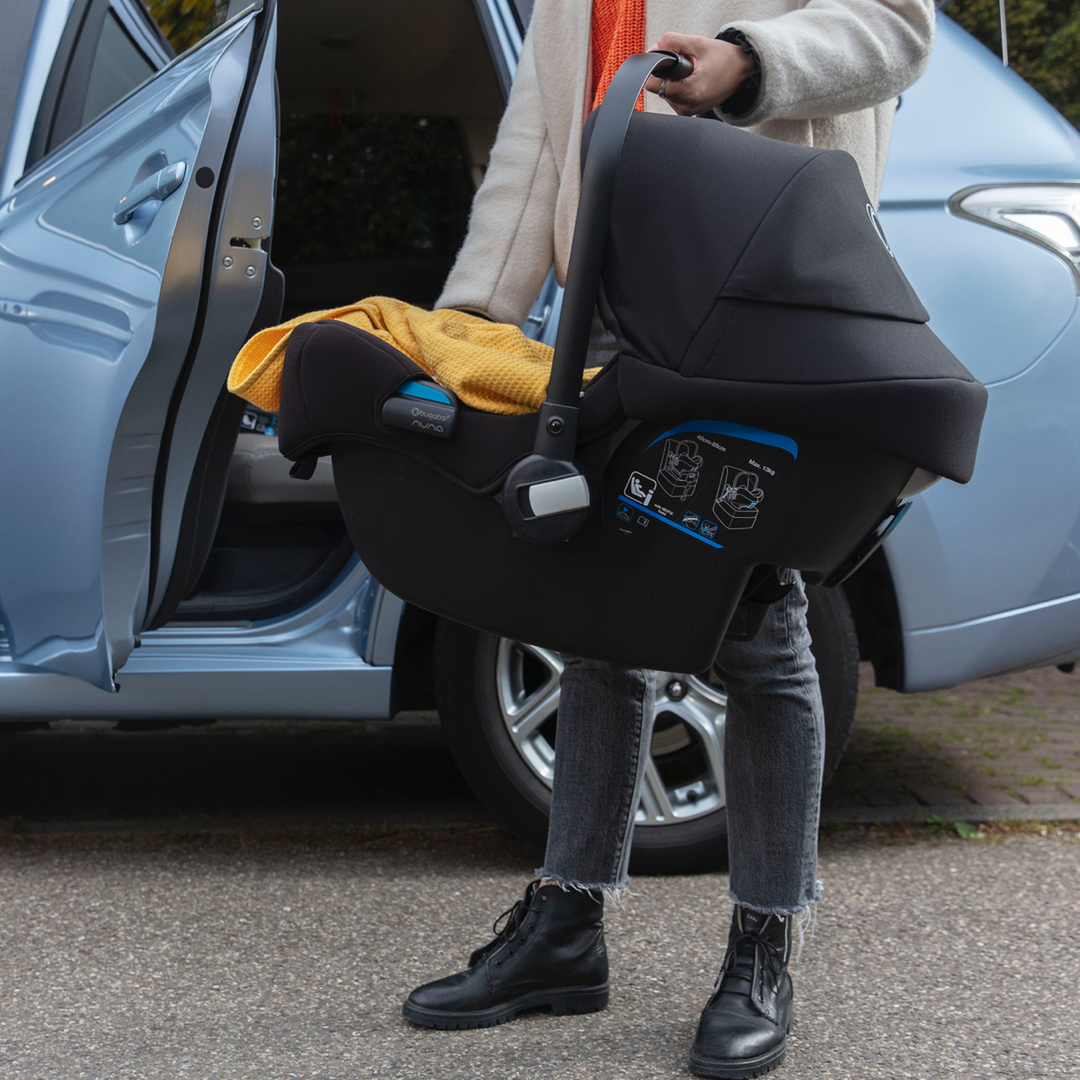
If you're looking for a minimalist option for a bassinet, look to your stroller's bassinet. This is best for parents who don't want too much stuff and want what they've already purchased to do double duty. Unfortunately, very few stroller bassinets are overnight sleep rated -- though one of our most popular stroller bassinets by UppaBaby is. All you have to do is add a bassinet stand and voila! You can stroll the day away, and then click the bassinet off your stroller frame and into the stand next to your bed and you're good to go.
Before deciding on this option, be sure to confirm if your stroller bassinet is overnight sleep rated - this is a matter of safety and as we said most are not, and keep in mind, standards do change over time, so be sure you seek out the most up to date information straight from the manufacturer.
Option 4 - Your travel crib, with a bassinet level

Yet another bassinet option is using your travel crib, if it has a bassinet level. Travel cribs are light and portable, and many offer a bassinet option. This option is best for a family that doesn't want to buy short-lived gear, and likes the idea of being able to easily put it away. The putting away thing of course sounds great, but keep in mind babies in those first months are sleeping so often it probably doesn't make sense to do this. Keep in mind, an overnight rated travel crib is only safe with the mattress that comes with it.
The good thing about travel cribs is that they can be used up to 3 years --- and can double as playards when you're vising friends' houses that aren't baby proofed, or on family adventures. Like with the bassinet, be sure to confirm that your chosen travel crib is overnight sleep safe. The Bugaboo Stardust and UppaBaby Remi are two great options that both offer a bassinet option and are overnight sleep rated.
Which option is right for your apartment?
When it comes to which is the right option for your apartment, take a look at your budget, your space, and your preferences. There's not one right choice for everyone: designing your nursery is personal. We say, so long as it's safe, then it works.
Safety checklist - whatever you choose
As for safety notes, we have a few to pop out for you:
1) When it comes to sleep, baby should always be put to bed on their back. (AAP)
2) The bassinet or crib should be bare: only a firm (and ideally breathable) mattress, a fitted sheet, and your baby. (AAP)
3) Only use the bassinet until your baby can push up on their hands, or starts showing interest in rolling over. This could be anywhere between 2-6 months. At this point, move baby to a crib, or if your bassinet is adjustable, lower it to the next level. (MamaLearn)
4) If you're using a stroller bassinet or travel crib as your solution, make sure it's overnight sleep approved and has not been recalled (CPSC). Many models, especially when it comes to stroller bassinets, are not safe for overnight sleep. For travel cribs, they're only safe with the mattress that comes with it.
5) Room share, never bed-share. (NY Department of Health, NIH)
The American Academy of Pediatrics, the CDC, and New York Department of Health all have sleep safety guidelines that are helpful.
Finding the best bassinets and cribs at Babesta

Now you know when you need a bassinet and a crib, and what options there are as for safe sleep for your little one. Start with the bassinet in your room, be it a standalone bassinet, one configuration of your 8-in-1, your overnight sleep rated stroller bassinet on a stand, or a travel crib with a bassinet). Then after 6 months, move baby to their crib.
At Babesta, you can check out a host of the best bassinets and cribs, as well as essentials you need for newborn sleep, (like swaddles, sleep sacks and pacifiers) right on our showroom floor. As a store that's curated for NYC parents, we know the city lifestyle. Choose from the best strollers, car seats, gliders, cribs, bassinets, and travel cribs that do more, are high quality, and look great.
When shopping the baby market, don't lose your cool: Shop Babesta.
FAQs
Can I skip the bassinet and put my newborn straight in a crib?
Yes - a crib that meets current CPSC standards is safe from day one. The only requirement is that it fits in your bedroom for the first six months of room-sharing. If your bedroom can take a full size or mini crib footprint, you can skip the bassinet entirely.
Where does my baby sleep after six months if I don't have a nursery?
The crib doesn't need its own room - it just needs a safe spot. Many city families keep the crib in their bedroom well past six months or carve out a sleep corner in the living area with a room divider. What matters is the sleep surface, not the square footage around it.
Do bassinets and cribs use the same mattress and sheets?
No. Bassinets, mini cribs, and full size cribs each take different mattress sizes and sheets must match exactly. A loose sheet is a safety hazard. Use only the mattress made for your specific model (especially for travel cribs and stroller bassinets) and buy fitted sheets sized to it.