Safer Sleep, Explained

Safer sleep means placing the baby alone, on their back in a crib, travel crib, or bassinet with a firm, flat surface and no loose bedding, toys, or bumpers. The American Academy of Pediatrics' guidelines help parents remember the do's and the don'ts when it comes to baby sleep.
Why the Rules Exist
Sometimes sleep guidance can feel like a whole bunch of no's, but behind every rule is tons of research aimed at keeping children safe. The good news is that the checklist is fairly short and set up is a one-time job.
The ABCs: The Whole Framework in Three Letters
Like a baby's primer, the basics of safer sleep can be distilled into three letters:
A - Alone
It's crucial that baby sleeps in their own space. That means no co-sleeping. Adult beds have all sorts of dangers, from too cushy mattresses, blankets, and pillows, to a bleary-eyed parent who could unintentionally roll in the middle of the night.
This being said, the American Academy of Pediatrics (AAP) does highly encourage room-sharing, especially for the first six months.
B - On their Back
The second guideline is about how you put baby down into their sleep space, be it a bassinet, crib, or travel crib. They should always be placed on their back on a firm, flat mattress. This is deemed by the CPSC and AAP as the safest way to sleep, for bedtime and naptime, until baby rolls both ways on their own.
C- In a Crib
The next guideline is where your baby should be sleeping. According to the CPSC and AAP, there are only three places that baby's safe to nod off (you may have guessed it by now): a sleep-safe bassinet, crib and travel crib. As we mentioned, the crib mattress must be firm and flat, as baby should never sleep on an incline.
The Bare Crib: What’s in, What’s Out, and Why

So now that you have your crib for your little one, what's allowed to be in it?
In
The list of things that can go in the crib is short: Firm flat mattress, fitted sheet, and baby (wearing a swaddle or sleep sack depending on their age and developmental stage). That's it.
Out
What can't be in the crib is everything else: blankets, quilts, and pillows because they can be a suffocation hazard; crib bumpers (which are banned from sale in the US); stuffed animals, and positioners/wedges. Weighted swaddles and weighted sleep sacks are also a big no as the CDC notes that these are dangerous.
Although weighted sleep things and crib bumpers are an always NO, blankets and stuffies can be added to the mix after 12 months.
Products: What Safer Means as You Shop
So when you're out in boutiques and online, searching for the perfect components to your nursery, how do you know if something is safer? Here's what to know:
Certified Sleep Spaces
When you're looking for that bedtime/naptime solution: a.k.a. the crib, bassinet or travel crib, you need to ensure it's certified for newborn sleep.
The Incline Rule
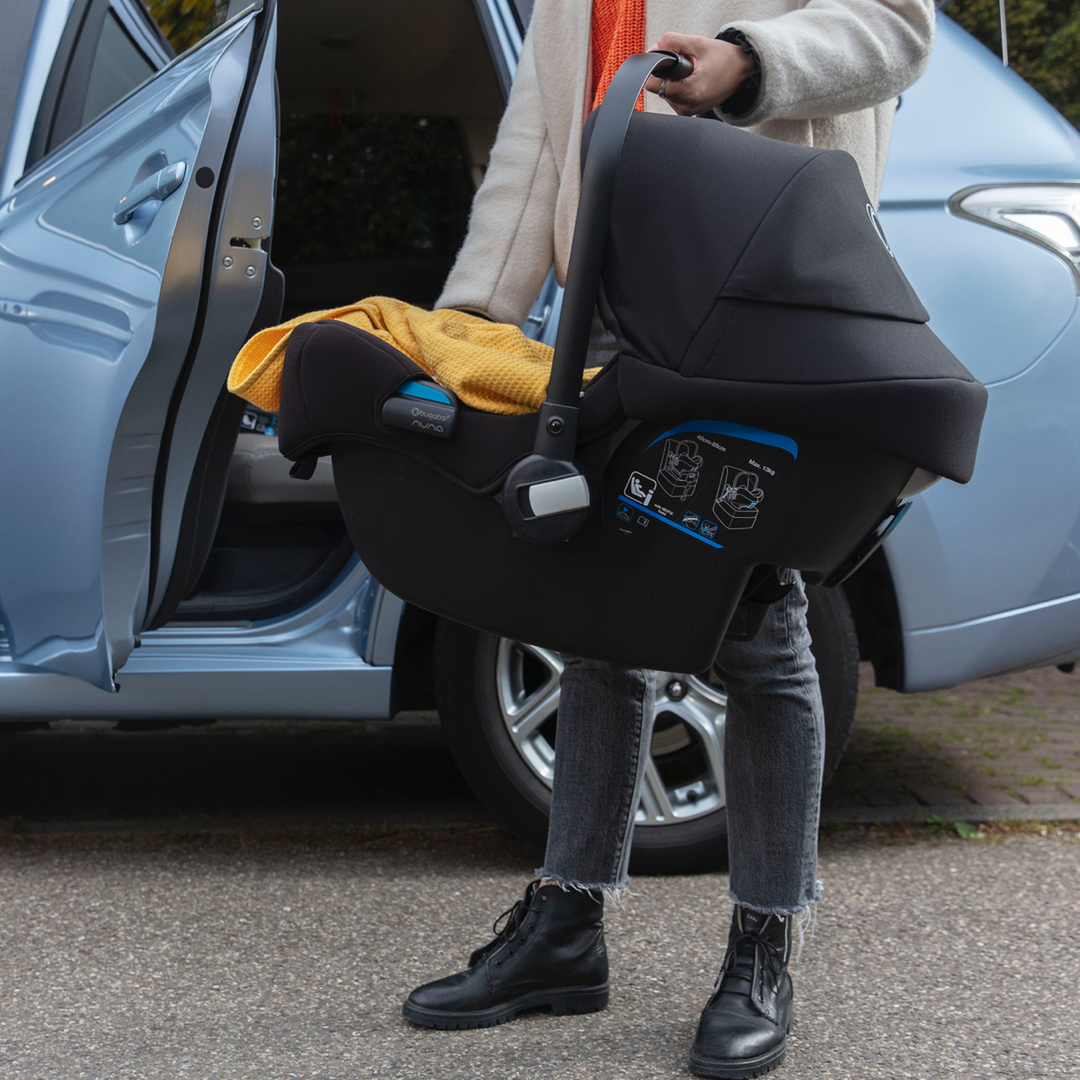
As for inclines, a baby cannot sleep in anything with an incline over 10 degrees. That's why swings, loungers, and car seats are not safe sleep spaces. No problem of course, if your baby is awake and supervised, but if they nod off, move them immediately to their crib.
Breathable and SIDS Prevention Marketing
If you ever read that a product prevents SIDS, be skeptical. Nothing outright prevents this. However, products with increased airflow can reduce the risk.
Secondhand Caution
When it comes to secondhand items, take some additional care. You have to be sure that your secondhand crib has not been recalled, has all of its original pieces and its instructions. You'll also have to test the security of it once it's built.
Note when looking on the secondhand market, you should beware of any crib with drop sides, as they have been outlawed in the US since 2011. As for mattresses, we think it's best to buy new. Older mattresses tend to lose their firmness, a must for newborns.
The Conditions: Beyond the Crib Itself

Beyond your baby's crib itself, look to the nursery's sleep conditions. The right set up can help to optimize your baby's sleep.
Room Temperature and Overheating
Think Goldilocks: You don't want the room too hot or too cold. Babies don't thermoregulate on their own at the beginning and are prone to overheating (that's why it's so important to have airflow).
According to the Sleep Foundation, set the temperature to between 68 to 72 when it's time for sleep.
Pacifier at Sleep Time
The Mayo Clinic notes that pacifiers can help babies sleep better. And as a huge extra bonus, says the National Institute of Health (NIH), they are thought to decrease the risk of SIDS.
Smoke Free Environment
Another guideline from the NIH is to keep a smoke-free environment. Second hand smoke is clearly a health hazard for everyone in the family and can increase the risk of SIDS.
Tummy Time while Awake
Your baby should always sleep on their back but by day, you should give them "tummy time" so they can build their neck and back muscles. Always do this under supervision, just a few minutes at a time.
Milestones That Change the Rules

There are a few milestones to look out for where the rules change. Let's take a look:
Rolling - stop swaddling
First, if you notice your little one trying to roll over, the CDC says it's time to stop swaddling. When they're able to roll (which can be as early as 2 months), they'll need their arms and legs free so that they can right themselves. At this point you also want to move baby from their bassinet, or if you're in an adjustable crib, move the base down.
Pushing on Hands - mobile comes down
Same goes for if your baby is pushing up on their hands. They should transition from the bassinet or go down a level, and their mobile should be removed.
Sitting/Pulling Up - mattress drops
Once they're sitting or pulling up on the side of the crib, it's time to drop the mattress once more. Then once they're trying to escape the crib (maybe around 2 years old), it's time to transition to a toddler bed.
The One Time Setup

As you can see, safer sleep is 15 minutes of setup and a handful of habits. Remember your ABCs, and make your baby's nursery as safe and friendly as possible.
At Babesta, we offer so a wide array of CPSC and JPMA certified cribs, as well as all the things you need to optimize your baby's bedroom.
We don't want you to lose your cool shopping the baby market. When it comes to building your registry, designing your nursery, or choosing the best crib, mattress, sleep sack, swaddle, stroller, car seat or any other gear you may need, choose Babesta.
For more baby sleep intel, read our Sleep checklist: 10 must haves and 7 you can skip.
FAQ
When can baby sleep with a blanket?
When a baby turns one year old, it's considered OK to sleep with a blanket.
Is it OK if baby rolls over at night?
Yes, it's OK if baby rolls over at night, however you need to ensure that they have already transitioned from a swaddle to a sleep sack, so their arms and legs are free and they are able to right themselves.
Are crib bumpers illegal?
Yes, crib bumpers are illegal in the US. That's because they pose a suffocation and entrapment hazard.
Can baby nap in a swing?
No, a baby cannot nap in a swing, as this is not a safe sleep space. If your baby falls asleep in a swing, immediately move them to their crib, bassinet, or travel crib.
When do I stop swaddling?
Stop swaddling when baby shows signs of wanting to roll over, which can happen as soon as 2 months. Once you see them do this, transition their night clothes to regular PJs or a sleep sack, where their arms and legs are free to move.
This information was derived by the AAP guidelines, CDC, CPSC, and NIH. 7/20/2026.